15 Best Rank Tracking Software We’re Using for 2026
We have been doing SEO long enough to live through every version of Google — Panda, mobile-first, and now the AI search era, where ChatGPT, Gemini, and Perplexity answer questions before Google even gets a chance.
In a landscape where the best SEO tools can only tell part of the story, understanding visibility requires a new approach.
Rankings move for reasons that have nothing to do with your content or your links. Some days you gain positions and still lose traffic. Five years ago, that felt impossible. Today, it is normal.
That is why rank tracking is more complicated and more important than ever. Not because keywords stopped mattering, but because visibility shifted.
You can sit in the top 3 and still lose clicks to an AI Overview, a chatbot answer, or a SERP feature that solves the query without sending anyone to your site.
At OneLittleWeb, we have seen this pattern across hundreds of campaigns in the US, UK, Canada, and Australia. One premium cycling brand we worked with grew from 1.4M to 1.8M monthly organic visitors — adding 400,000+ new visitors in just 6 months. The key wasn’t chasing individual keyword positions. It was tracking how the brand appeared across product categories, SERP features, and the entire search ecosystem.
When we started layering AI visibility tracking, SERP-feature monitoring, and device-level comparisons into our workflow, the story finally made sense. Drops that looked random suddenly had clear causes. Wins we couldn’t explain became repeatable patterns.
That same testing process is what I used here.
I tested more than 30 rank tracking tools on real client sites across e-commerce, SaaS, and content-heavy industries. I wasn’t just checking positions—I looked for tools that show how your brand appears across Google, AI engines, and every surface where people search and make decisions.
After 8 years of running campaigns and testing tools that either became daily essentials or collected dust, these are the 15 best rank tracking software that actually deliver results.
Let’s dive into the tools.
What is a Rank Tracker?
A rank tracker is a tool that monitors where your pages appear in search engines for specific keywords. It shows whether rankings go up or down and why those changes happen.
At OneLittleWeb, we rely on rank trackers as the baseline data layer in nearly every campaign, especially when validating early SEO wins or confirming whether our optimizations are moving in the right direction.
In several client projects, these tools helped us spot patterns long before traffic changed, such as early ranking lifts from new content clusters or subtle declines in local visibility.
Rank trackers matter because ranking results now vary by device, location, and search type. They show when competitors outrank you, when a SERP feature replaces your link, or when AI Overviews affect visibility.
Small businesses, agencies, and marketing teams use rank trackers to evaluate visibility, measure content performance, and diagnose traffic shifts.
Without a tracker, you cannot reliably measure SEO progress.
Why Should Agencies Use Rank Trackers (Even When AI Thinks It Knows Better)
Most of the panic I see from clients doesn’t come from the ranking drop itself.
It comes from not knowing why the drop happened.
Agencies must rely on rank trackers because they turn scattered SEO work into something you can measure, explain, and improve. When you manage multiple clients, you cannot afford to guess why rankings move or wait until traffic drops to react.
A good rank tracker gives you the story behind the number:
- Which SERP feature took your clicks
- Whether mobile and desktop behave differently
- What competitors launched last week
- If an AI Overview suddenly decided to “summarize” your content
- Whether your page dropped or Google rewrote the SERP around you
If you manage more than one website, a rank tracker is not optional. It is how you run SEO with confidence instead of reacting after the damage is done.
Because, you’re measuring where your brand shows up across the entire search ecosystem.
What to Look for in a Rank Tracker
After running rank trackers across hundreds of campaigns, I have learned that the best tools all share one quality: they make changes easy to understand and even easier to act on.
Here is what actually matters when choosing one:
- Consistency of Data: You need a tool that reflects real SERPs, not fluctuating estimates.
- Location and Device Precision: Rankings shift by city, ZIP code, and device, so your tracker must capture those variations accurately.
- Visibility Beyond Blue Links: Modern results include snippets, carousels, and AI Overviews. Your tool should show the full SERP, not just positions.
- Competitor Context: Great track trackers reveal who is gaining or losing ground around you.
- Reporting That Clients Understand: Clear dashboards and automated reporting save hours every week.
- Integrations That Fit Your Workflow: Look for tools that plug into Looker Studio, GSC, Sheets, and Slack without friction.
- Fair Pricing Based on Keyword Volume: You want predictable pricing that grows with your workload, not against it.
These are the qualities that make a rank tracker valuable across client work, especially when search volatility is high.
How I Selected the Best Rank Trackers
To build this list, I tested more than 30 rank tracker tools on real client sites. I compared their results against live SERPs across multiple locations, devices, and industries.
Here is the exact process I followed:
- Testing Inside Real Client Campaigns: Each tool was added to active AI SaaS, e-commerce, and content-heavy projects to see how it performed during actual ranking fluctuations.
- Manual SERP Verification: Whenever a tool reported a ranking change, I compared it to real Google results across multiple devices and locations.
- AI and SERP Feature Detection: I checked how well each tool captured featured snippets, local packs, video spots, and AI Overviews.
- Reporting Efficiency: I evaluated how quickly each tool could produce a client-ready report without manual cleanup.
- Integration Flexibility: Tools that synced easily with Looker Studio, GSC, Sheets, and Slack scored higher.
- Scalability and Pricing Logic: I compared keyword limits, refresh frequency, and pricing against real agency needs.
- Our Own Experience at OneLittleWeb: I relied heavily on tools that consistently helped us identify volatility early, communicate results clearly, and scale tracking across multiple clients without friction.
This process ensured that every tool in this guide earned its place through performance, not popularity.
Summary Table: 15 Best Rank Tracker Tools (2026)
Here is the short version of what stood out after testing more than 30 search engine rank trackers on real client sites across thousands of keywords.
| Tool Name | Best For | Key Features | Price | Our Notes |
| Ahrefs (Rank Tracker) | Accuracy and deep keyword visibility | Large keyword database, AI visibility, SERP snapshots, Looker Studio integration | $129/mo | Still our most reliable tracker when accuracy matters most |
| Semrush (Position Tracking) | Complete all-in-one tracking for multi-channel SEO | Daily updates, multi-location tracking, AI Overview visibility, Share of Voice | $165.17/mo | Heavy but unmatched for teams that want everything in one place |
| SE Ranking | Balanced rank tracking for agencies | AI visibility, SERP feature tracking, keyword grouping, forecasting | $52/mo | Best value for agencies that want depth without enterprise pricing |
| AccuRanker | Real-time updates and precision tracking | Instant refresh, LLM visibility, advanced filters, strong reporting | $224/mo | The industry’s fastest tracker and ideal for live volatility analysis |
| SERPWatcher (Mangools) | Simple daily tracking for SMBs and solo SEOs | Performance Index, mobile/desktop tracking, clean visuals | $30.50/mo | Best lightweight option for smaller sites and clean reporting |
| Nightwatch | Advanced analytics with premium visuals | Multi-engine tracking, pinpoint local tracking, AI visibility | $32/mo | Great dashboards, strong reporting, excellent for client-facing visuals |
| Wincher | Fast and beginner-friendly tracking | Daily updates, landing-page insights, competitor tracking, CMS integrations | $10/mo | Extremely easy to set up, ideal for small teams and freelancers |
| PowerSuite | Unlimited keyword tracking for analysts | Unlimited keywords, multi-engine tracking, white-label reports | $29.10/month | Old-school UI but powerful and cost-efficient for heavy keyword loads |
| Zutrix | Affordable AI-powered tracking | AI alerts, geo-accuracy, Slack/Zapier automations | $19/mo | Surprisingly accurate and perfect for small agencies managing local SEO |
| Nozzle | Enterprise-level SERP depth | On-demand pulls, share-of-voice metrics, unlimited segmentation | $49/mo | Deepest SERP intelligence on the list, ideal for data-heavy SEO teams |
| Advanced Web Ranking | Agency-grade reports and long-term trends | White-label reports, multi-engine support, trend analysis | $69/mo | Trusted by agencies for its polished reports and scalable tracking |
| Google Search Console | Baseline truth-layer for all SEO diagnostics | First-party clicks, impressions, device splits, indexing insights | Free | Essential for understanding real visibility patterns and SERP behavior |
| Morningscore | Beginner-friendly, gamified SEO tracking | SEO missions, clean rank tracking, difficulty scoring | $49/mo | Ideal for startups or teams learning SEO without overwhelm |
| Ubersuggest | Budget-friendly tracking for small sites | Competitor tracking, mobile/desktop ranks, basic SERP snapshots | $12/mo | Good starter tool; ideal for small businesses on limited budgets |
| ProRankTracker | Hyper-local rank tracking for agencies | ZIP-level accuracy, multi-engine support, white-label reporting | $4/100 terms | One of the most accurate tools for local SEO and multi-client dashboards |
15 Best Rank Tracker Tools in 2026 (Free + Paid)
Here are the 15 best rank trackers in 2026 based on how they performed inside our client campaigns at OneLittleWeb. Each of these tools cover different roles in real SEO workflows.
1. Ahrefs — Best for accuracy and SEO visibility
2. Semrush — Best all-in-one tracking for large teams
3. SE Ranking — Best balance of price and AI visibility
4. AccuRanker — Best for real-time updates
5. SERPWatcher (Mangools) — Best for clean, simple reporting
6. Nightwatch — Best for multi-engine tracking
7. Wincher — Best for small and mid-sized businesses
8. SEO PowerSuite — Best for unlimited keyword tracking
9. Zutrix — Best affordable AI-powered rank tracker
10. Nozzle — Best for data-heavy, enterprise-level users
11. Advanced Web Ranking — Best for white-label client reporting
12. Google Search Console — Best free diagnostic tracker
13. Morningscore — Best for beginners and small teams
14. Ubersuggest — Best low-cost starter rank tracker
15. ProRankTracker — Best for local SEO tracking
Now let’s take a closer look at each of these tools and how they stand out in their category.
1. Ahrefs – Best for Accuracy and Deep SEO Visibility
Best For: Agencies focused on backlink analysis, competitor research, and accurate, large-scale SEO visibility.
How I Use It: I use Ahrefs daily for keyword research, SERP analysis, link audits, and diagnosing ranking fluctuations across client campaigns. Its Rank Tracker is one of the first tools I open when reviewing performance.
Overview
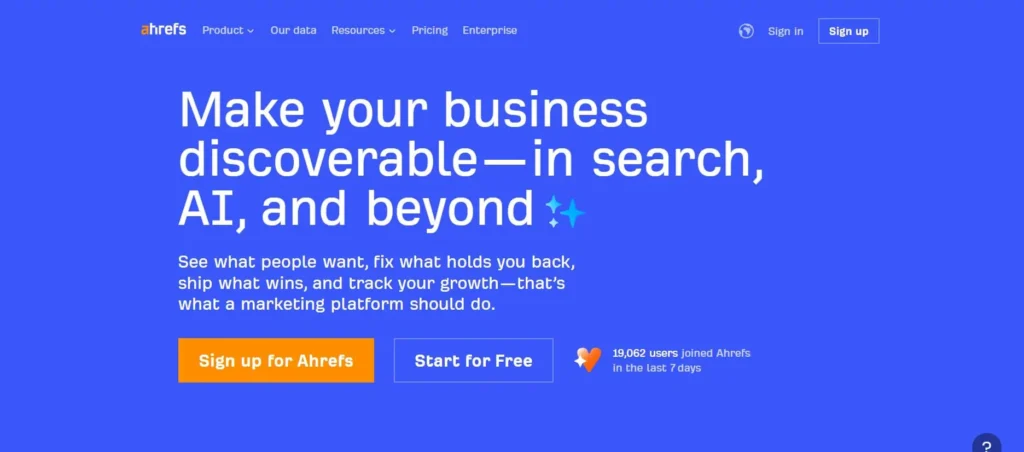
Ahrefs has always felt like the tool you rely on when you want the truth.
Not the noise, not the vanity metrics, but clean data that does not wobble when everything else in SEO feels unstable.
When I tested it again this year, I was reminded why so many teams, including ours, never remove Ahrefs from their stack.
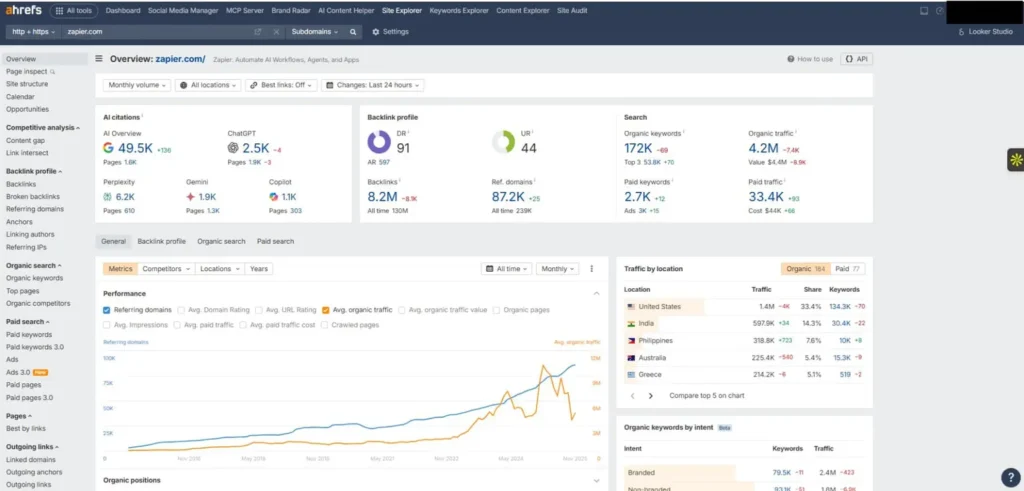
The Rank Tracker still runs on one of the largest keyword databases online with 110 billion plus keywords across 200 plus countries. That alone gives you a more complete picture than most tools can offer.
But what really stood out in 2026 is how naturally Ahrefs stepped into the AI search era.
Brand Radar gives you visibility inside ChatGPT, Gemini, and Copilot. When I checked a client that recently lost traffic, Ahrefs showed me that the issue was not rankings.
It was AI Overviews answering the query before Google listed any sites. That was a moment where the tool explained the problem better than any audit could.
The interface remains familiar. The SERP snapshots are more useful than ever. And the Looker Studio and GSC integrations still make reporting painless. It is not a flashy tool. It is a dependable one. And sometimes in SEO, that is what matters most.
Why It’s Worth It
- Tracks rankings and brand mentions across both search engines and AI platforms
- Enterprise-grade data accuracy with one of the web’s largest keyword databases
- AI-powered localization and technical-SEO automation
- Deep integrations with GSC, Looker Studio, and custom APIs
- Seamless reporting and visualization for agencies and enterprise teams
Pricing
- Lite: $129/month
- Standard: $249/month
- Advanced: $449/month
- Enterprise: $1,499/month
Reviews & Ratings
- G2: 4.5 out of 5 stars (606+ reviews)
- Capterra: 4.7 out of 5 stars (577+ reviews)
Sentiment: Loved for accuracy and reliability across large keyword sets.
2. Semrush – Best All-in-One Tracking for Large Teams
Best For: Large teams that want an all-in-one SEO platform with deep tracking, competitor insights, and strong reporting.
How I Use It: I use Semrush every week to monitor visibility shifts, track competitor movement, and generate fast updates for clients.
Overview
Semrush is the brilliant multitasker of SEO, and doesn’t really need an introduction. It does almost everything, and it does it so well.
During testing, I kept jumping between modules, and each time I was reminded of how much data Semrush puts at your fingertips.
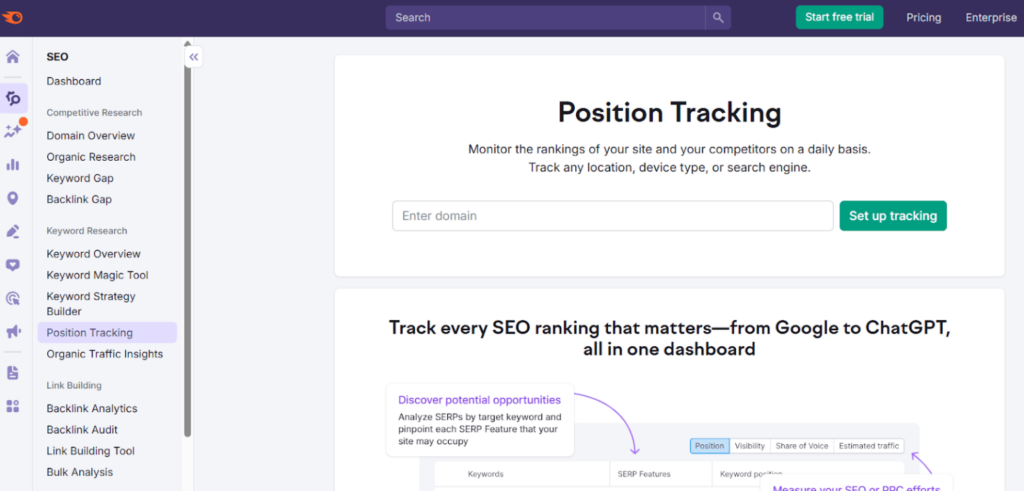
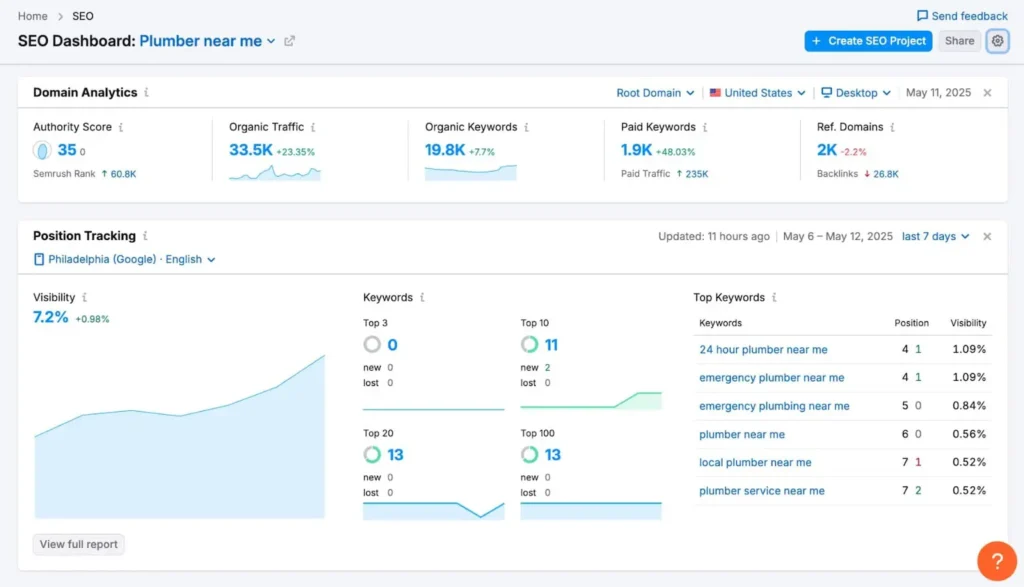
Its Position Tracking module is one of the most complete rank tracking softwares available. It covers Google, Bing, and Baidu.
It updates daily. It lets you segment by device, page, country, city, language, and even SERP feature. And now it goes a step further by showing where you appear inside ChatGPT and Google AI Overviews.
When I plugged a struggling client into Semrush, the Visibility Index and Share of Voice told a different story than the rankings showed.
They were actually improving in areas that mattered, but losing space to SERP features. That kind of context is what sets Semrush apart from other rank tracker tools.
Is it heavy? Yes.
Is it pricey as you add features? Also yes.
But it is the most complete view you can get in one login.
Why It’s Worth It
- Tracks keywords, AI results, and SERP features across devices and locations
- “Visibility Index” and Share-of-Voice metrics show true performance, not vanity ranks
- Custom alerts for ranking drops or jumps
- Easy, client-ready PDF or Looker Studio reports
- Seamless integration with the full Semrush suite: keyword, backlink, and content tools
Pricing
- 7-day free trial
- Starter: $165.17/month
- Pro+: $248.17/month
- Advanced: $455.67/month
Reviews & Ratings
- G2: 4.5 out of 5 stars (3,035+ reviews)
- Capterra: 4.6 out of 5 stars (2,299+ reviews)
Sentiment: Semrush is mostly praised for its comprehensive dataset and multi-location tracking.
3. SE Ranking – Best Balance of Price and AI Visibility
Best For: Agencies needing the best balance of pricing, daily accuracy, and strong AI visibility tracking.
How I Use It: I use SE Ranking when I need SERP feature tracking, keyword grouping, and Share of Voice analysis in one clean dashboard.
Overview
SE Ranking surprised me the most in testing. This SEO rank tracking tool has quietly evolved into one of the most complete all-in-one toolkits out there. It’s not just a rank tracker anymore. The 2026 version feels like a platform built for the AI era.
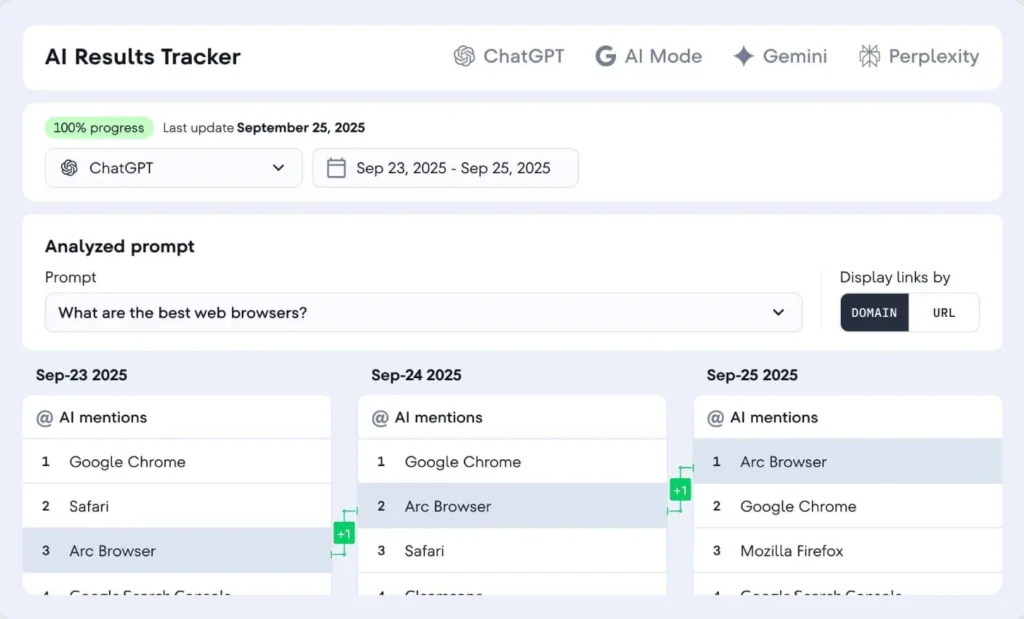
Instead of treating it like an add on, SE Ranking made it part of the core tracking system. You can see how your site appears in Google AI Overviews, ChatGPT, Gemini, and Perplexity, right next to your traditional Google and Bing rankings.
For 65 dollars per month with 500 keywords, it offers an incredible depth of data. It tracks 37 plus SERP features, supports keyword grouping and tagging, stores cached SERPs, and integrates cleanly with GA, GSC, and Looker Studio.
It did not take long to see why agencies love it.
It gives you a realistic sense of where your pages actually stand, not just their numerical rank.
Why It’s Worth It
- Tracks visibility across Google AI Overviews, ChatGPT, Gemini & Perplexity
- Monitors 37+ SERP features with daily updates
- Supports keyword grouping, tagging, and Share-of-Voice analysis
- Integrates cleanly with GA, GSC & Looker Studio
- Built-in forecasting, reporting, and API options for scaling teams
Pricing
- Free trial available
- Essential: $52/month
- Pro: $95.20/month
- Business: $207.20/month
Reviews & Ratings
- G2: 4.7 out of 5 stars (2,330+ reviews)
- Capterra: 4.7 out of 5 stars (296+ reviews)
Sentiment: One of the highest-rated tools in the category for price-to-performance.
4. AccuRanker – Best for Real-Time Updates
Best For: Agencies and consultants who need real-time keyword updates and lightning-fast diagnostics.
How I Use It: I use AccuRanker during algorithm updates because it lets me refresh rankings instantly and see changes as they happen.
Overview
If you hate waiting, AccuRanker is your tool. I call it the caffeine shot of rank trackers.
Its near-instant update feature is almost addictive. It lets you see ranking changes the moment they happen.
Every time I used it, I felt like I was seeing the “live reality” of a site.
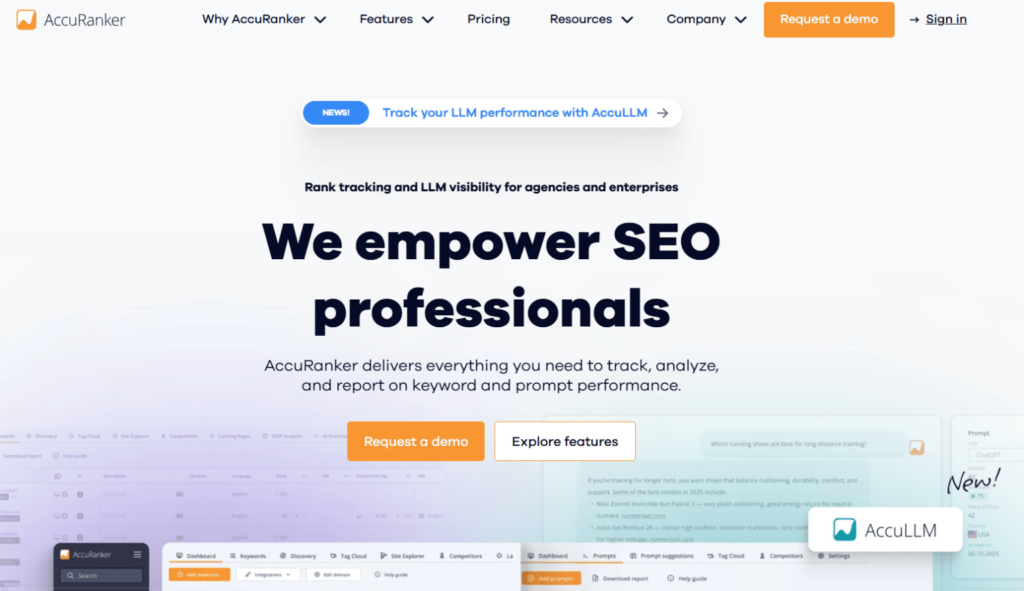
The automated rank tracker also processes AI visibility through AccuLLM. It has more filtering options than most teams will ever need.
Starting at around 109 dollars per month for 1,000 keywords, it is clearly built for agencies and heavy SEO workflows. When I ran it during an algorithm update, I felt like I was watching the SERP shift in real time.
That kind of speed is rare. And in an AI driven search world, fast insights are more valuable than ever.
Why It’s Worth It
- Instant keyword updates on demand
- Real-time AI visibility tracking with AccuLLM
- 50+ filters, tags, and custom dashboards
- Integrations with GA, GSC, Looker Studio, and Data Studio
- Forecasting tools for traffic, conversions, and business impact
Pricing
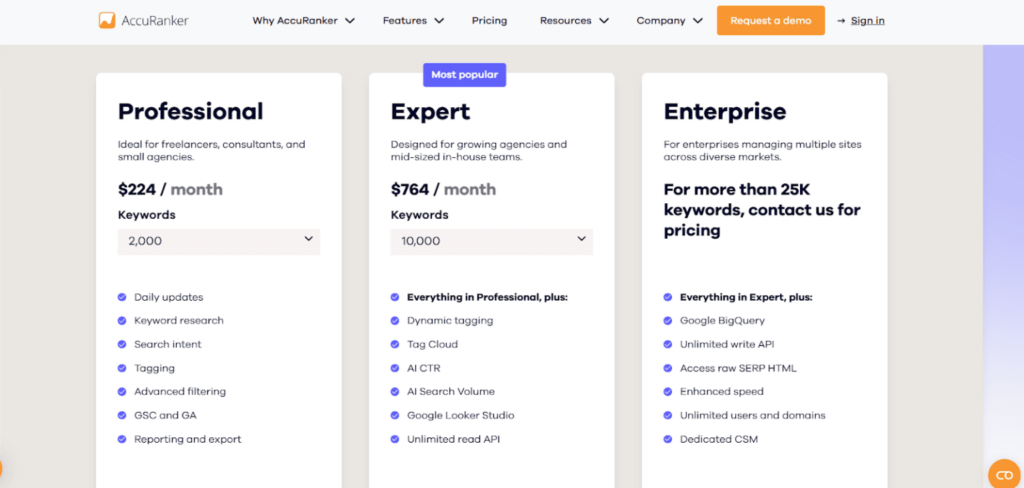
- Professional: $224/month
- Expert: $764/month
- Enterprise: Custom
Reviews & Ratings
- G2: 4.8 out of 5 stars (227+ reviews)
- Capterra: 4.9 out of 5 stars (330+ reviews)
Sentiment: Widely praised as the fastest, most accurate rank tracker available, with exceptional real-time capabilities.
5. SERPWatcher (Mangools) – Best for Clean, Simple Reporting
Best For: Freelancers and SMBs that want simple, clean, and reliable daily tracking.
How I Use It: I use SERPWatcher when I need a fast, no-clutter overview and a single performance score clients can understand easily.
Overview
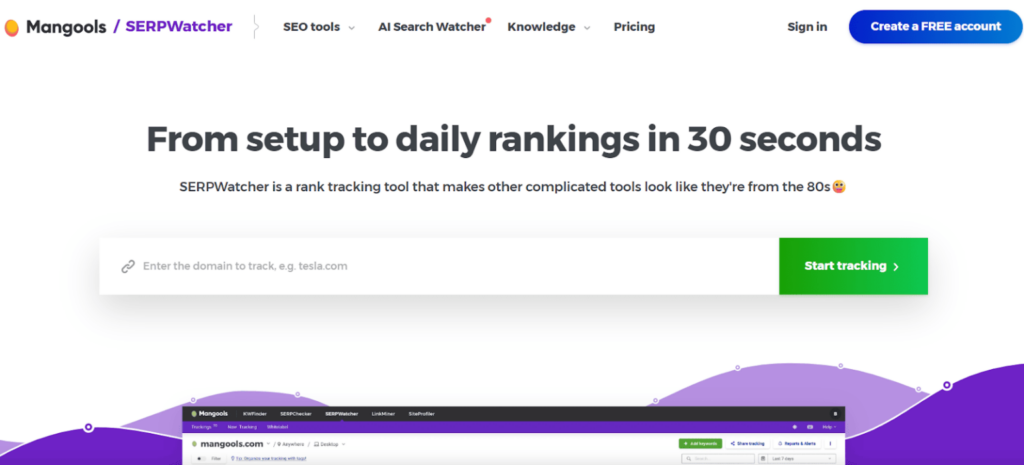
SERPWatcher is the best rank tracker for people who hate clutter.
I reach SERPWatcher when someone says, “I just want to understand what is going on without needing a degree in data science.”
It is simple in the best way.
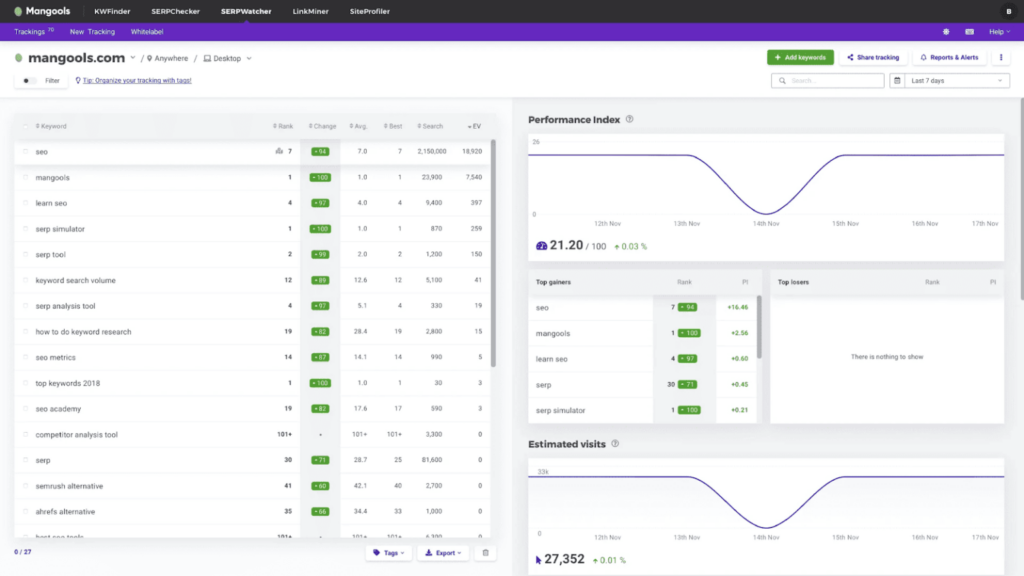
Clean design with a single Performance Index score, with very easy reporting.
With plans starting at 49 dollars per month, it tracks 200 to 1,500 keywords and covers 65 thousand global locations.
This tool does not pretend to be enterprise software. It focuses on clarity and executes it perfectly.
Why It’s Worth It
- Visual “Performance Index” combines ranking + volume data
- Tracks 65K+ global locations across desktop and mobile
- Clean interface with daily updates and SERP snapshots
- Easy link-sharing for reports and automated alerts
- Integrates smoothly with other Mangools tools (KWFinder, LinkMiner)
Pricing
- Free Plan: Forever free account (limited: 5 lookups/24h, no credit card)
- Basic: $30.50/month
- Premium: $40.50/month
- Agency: $70.50/month
- 48-hour money-back guarantee
Reviews & Ratings
- G2: 4.7 out of 5 stars (95+ reviews)
- Capterra: 4.8 out of 5 stars (91+ reviews)
Sentiment: A simple, reliable tracker with beginner-friendly design, ideal for SMBs.
6. Nightwatch – Best for Multi-Engine Tracking
Best For: Agencies that want premium visuals, advanced filtering, and strong AI visibility tracking.
How I Use It: I use Nightwatch when I need ZIP-level local tracking, beautiful white-label reports, and multi-engine monitoring.
Overview
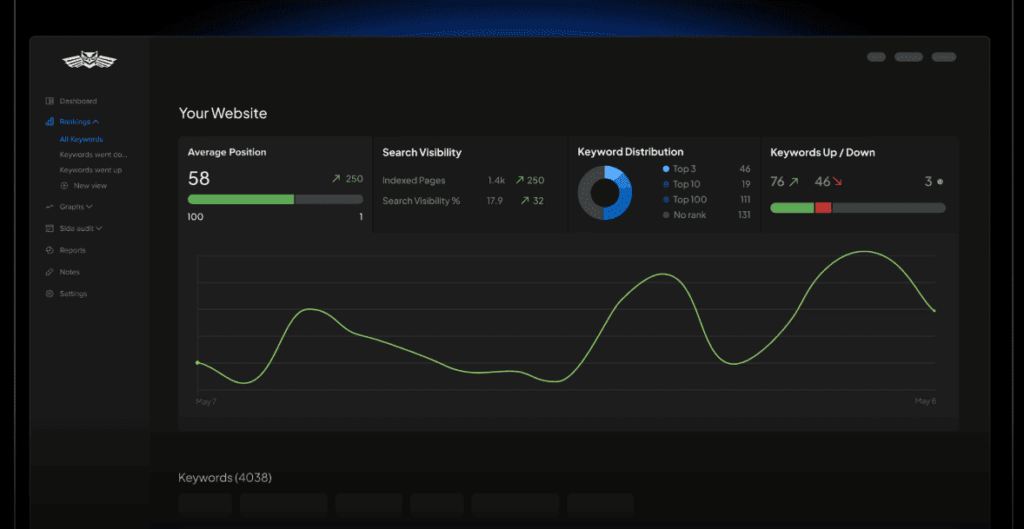
Nightwatch is built for marketers who want their SEO data to look as good as it performs. It is visually polished, deeply detailed, and surprisingly advanced.
And now, it even tracks AI search visibility across ChatGPT, Gemini, and Claude.
With pricing starting at 39 dollars per month, it tracks Google, Bing, YouTube, Yahoo, and DuckDuckGo, and covers 190 thousand locations with ZIP code precision.
When I used Nightwatch for a client that required heavy reporting, it produced some of the cleanest and most impressive white label reports I have seen.
The depth can feel overwhelming at first. You’ll need a bit of time to get comfortable with the dashboard.
Why It’s Worth It
- Tracks traditional and AI search results side-by-side
- Covers Google, YouTube, Bing, Yahoo, and DuckDuckGo
- Pinpoint local tracking in 190K+ locations (down to ZIP level)
- Integrates with GA, GSC, and Data Studio
- Sleek, customizable dashboards and automated white-label reports
Pricing
- 14-day trial
- 250 keywords: $32/month
- Cancel subscription anytime
Reviews & Ratings
- G2: 4.9 out of 5 stars (43+ reviews)
- Capterra: 4.8 out of 5 stars (39+ reviews)
Sentiment: A visually polished rank tracker known for its clean dashboards and deep local insights, perfect for agency reporting.
7. Wincher – Best for Small and Mid-Sized Businesses
Best For: Small businesses and teams that need fast setup, daily accuracy, and multilingual tracking.
How I Use It: I use Wincher when I want ranking trends in minutes, with quick competitor comparisons and landing page insights.
Overview
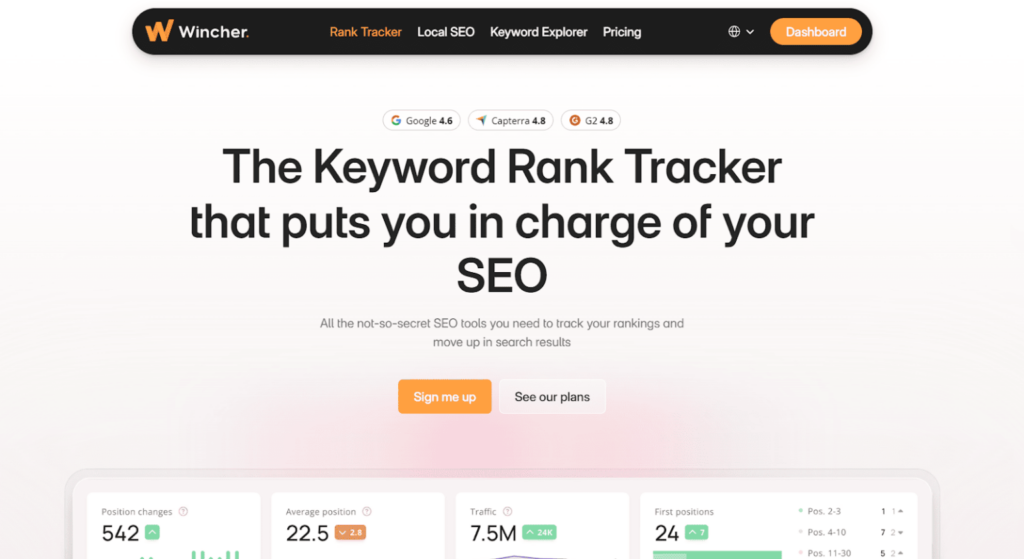
Wincher keeps search engine rank tracking fast, easy, and affordable.
It’s built for people who just want the facts, with zero distractions and complex dashboards.
Exactly what small teams and solo marketers need.
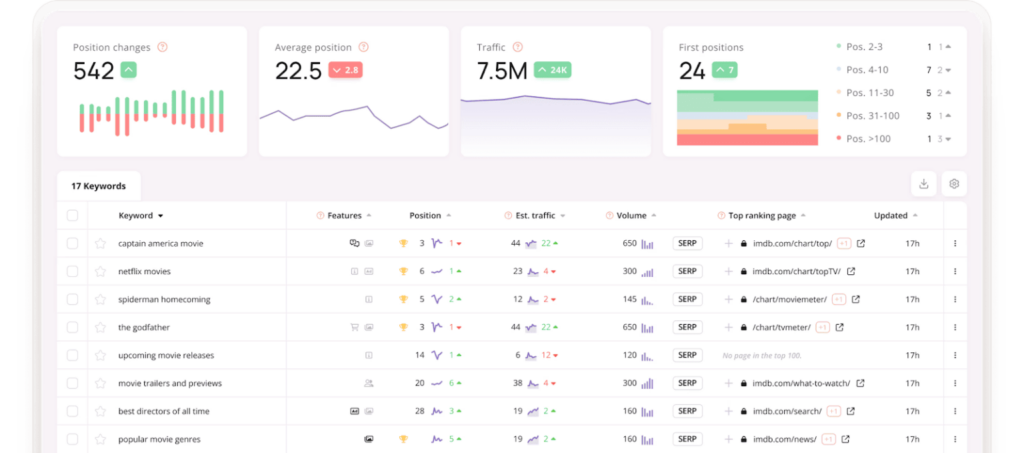
Starting at 24 dollars per month, you get daily rankings, multilingual support, local tracking, landing page insights, and strong competitor tracking. It also integrates directly with WordPress, Wix, and Looker Studio.
I love how little setup Wincher needs.During testing, I appreciated how quickly Wincher got everything up and running. Within minutes, we had keyword trends, competitor comparisons, and landing page breakdowns running smoothly.
It’s one of the few tools that balances accuracy with clarity with zero clutter, no overkill, just solid SEO tracking that feels human. Some tools take hours to set up. Wincher feels instant.
Why It’s Worth It
- Tracks rankings daily across desktop and mobile
- Local and multilingual keyword tracking
- Clean dashboards with historical graphs and landing page insights
- Built-in competitor tracking and on-page SEO checker
- Integrates with WordPress, Wix, and Google Looker Studio
Pricing
- Basic: $10/month
- Standard: $18/month
- Professional: $64/month
Reviews & Ratings
- G2: 4.6 out of 5 stars (456+ reviews)
- Capterra: 4.8 out of 5 stars (107+ reviews)
Sentiment: A no-frills, reliable tracker, with excellent value for money, ideal for SMBs.
8. SEO PowerSuite – Best for Unlimited Keyword Tracking
Best For: Teams needing unlimited keyword tracking at a one-time cost.
How I Use It: I use Rank Tracker when I need deep historical SERP analysis or multi-engine checks without ongoing SaaS fees.
Overview
Rank Tracker might look old-school, but in our opinion, it’s still one of the most powerful rank tracking tools out there. It’s been around long enough to earn trust.
I tested this again after a few years — and honestly, it’s still a workhorse.
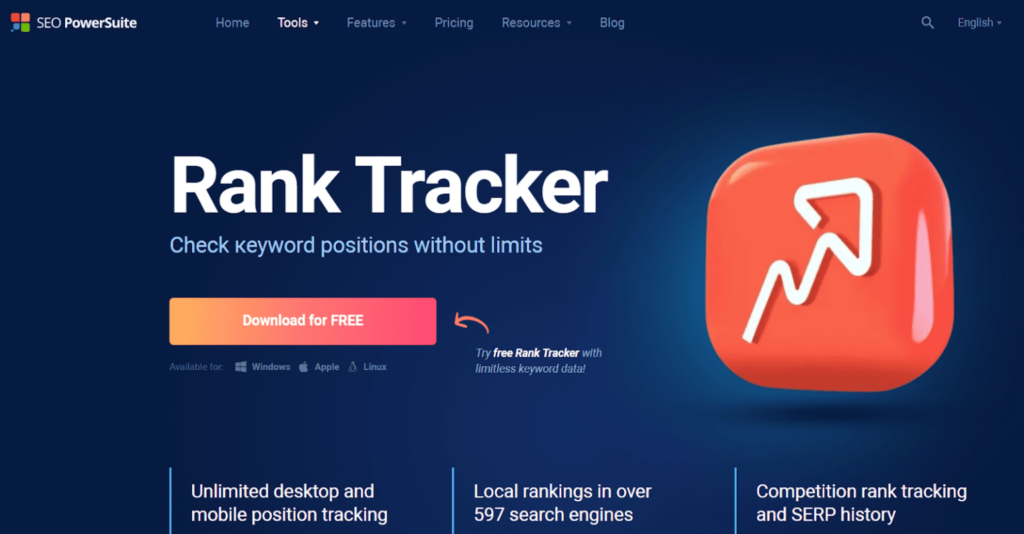
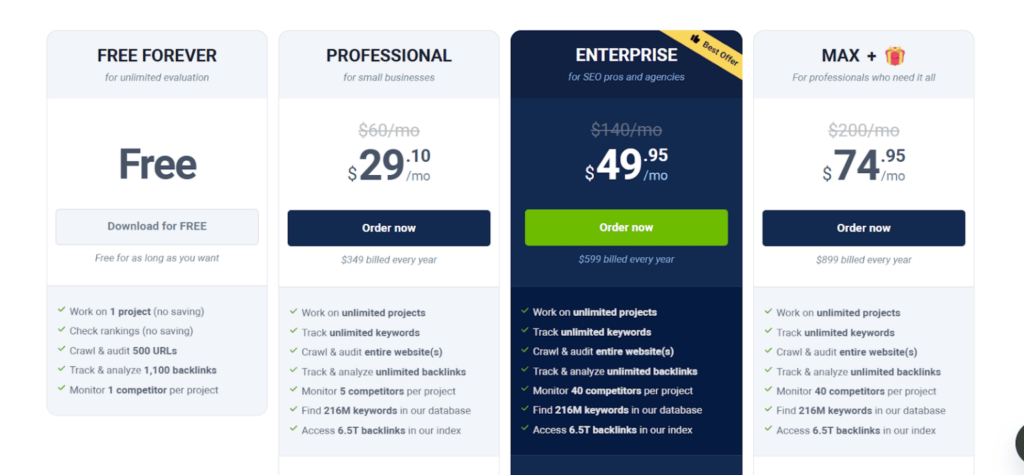
This is a desktop app that tracks unlimited keywords across 590+ search engines, including Google, Bing, Yahoo, Baidu, and YouTube. It costs a one-time fee of 149 dollars.
You can run local, mobile, or global checks as often as you want, store years of SERP history, and even build white-label reports that look client-ready straight out of the box. And unlike most SaaS tools, there are no recurring fees once you buy the license.
It feels like using a serious analysis tool, with unlimited keywords, historical data, multi-engine tracking, and not to forget – deep competitor insights.
It is not pretty, but it is powerful.
Why It’s Worth It
- Unlimited keyword and website tracking (no caps, no upsells)
- Covers Google, Bing, Yahoo, YouTube, Baidu, Yandex, and more
- Local rank tracking down to city or street level
- Built-in keyword research, SERP feature tracking, and competitor analysis
- Integrates with Google Analytics & Search Console for unified data
- One-time license fee — not a subscription
Pricing
- Free
- Professional: $29.10/month
- Enterprise: $49.95/month
- Max +: $74.95/month
Reviews & Ratings
- G2: 4.5 out of 5 stars (557+ reviews)
- Capterra: 4.5 out of 5 stars (380+ reviews)
Sentiment: Even though it is a powerful “desktop only” tool , it’s loved for unlimited tracking and robust desktop performance.
9. Zutrix – Best Affordable AI-Powered Rank Tracker
Best For: Small teams that need AI-powered accuracy at an affordable price.
How I Use It: I use Zutrix for hyper-local tracking and automated Slack alerts, especially for clients active in multiple regions.
Overview
I named Zutrix the “AI brain” of search engine rank tracking.
We ran Zutrix across a few client dashboards, and it took me by surprise. The data matched Google Search Console almost perfectly, something most “AI trackers” can’t say.
It’s light, accurate, and smart about automation. For teams juggling multiple local markets, this is the no-fuss tool that just gets it right.
Zutrix feels like the smart, modern tracker built for real marketers. Not just developers or data scientists. Its AI-powered and geo-accuracy feature surprised me more than I expected.
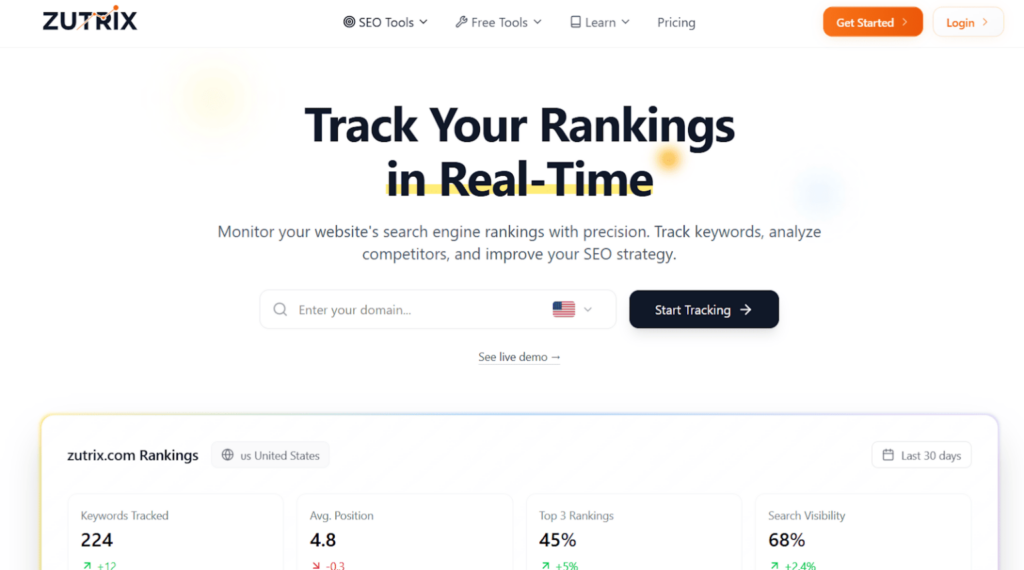
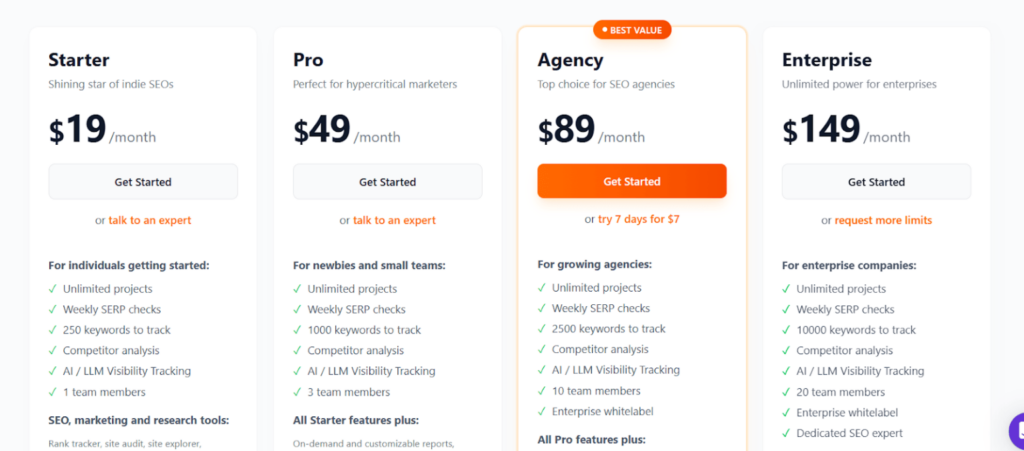
Starting at $19/month, it tracks up to 250 keywords and goes all the way to 10,000+ on its enterprise plan.
It mimics human searches to deliver 99.9% accuracy and supports 200+ countries and 2,000+ cities. The tool targets small agencies handling local and global campaigns at once.
Why It’s Worth It
- AI alerts predict and notify ranking changes
- Automation through Slack and Zapier
- Affordable pricing for small marketing teams
- Includes extras like site audits, backlink tracking, and AI visibility insights
Pricing
- Starter: $19/month
- Pro: $49/month
- Agency: $99/month
Reviews & Ratings
G2: 4.1 out of 5 stars (10+ reviews)
Sentiment: One of the smartest AI-powered rank trackers for small agencies.
10. Nozzle – Best for Data-Heavy, Enterprise-Level Users
Best For: Power users and enterprise SEO teams that want deep, customizable SERP data.
How I Use It: I use Nozzle when I need very granular competitor tracking or when I want SERP data refreshed every few minutes.
Overview
Nozzle is built for data lovers; the kind of SEOs who want everything, not just rank positions.
I spent hours playing with filters, and it rewards that kind of curiosity. Once you set it up right, the insights it gives are ridiculously deep, but in a good way.
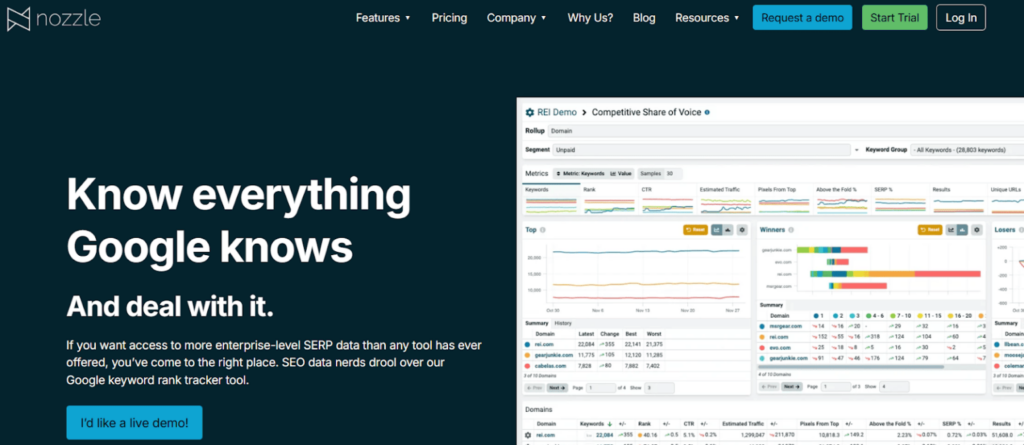
It’s an enterprise-grade rank tracker that monitors every inch of the SERP, from pixels-from-top to “share of voice” across domains and subdomains.
Starting at $59 per month, it lets you track keywords as often as you want — hourly, daily, weekly, or even every five minutes. Then, it stores all your historical data forever, which is incredibly useful for long-term analysis.
When I used Nozzle, I found myself exploring deeper and deeper because it rewards curiosity with insight.
Why It’s Worth It
- Highly customizable dashboards and segmentation
- On-demand data refreshes every few minutes
- Great for competitor and brand monitoring
- Scales easily for multi-domain SEO teams
Pricing
- Basic: $49/month
- Advanced: $99/month
- Pro: $249/month
- Pro Plus: $499/month
Reviews & Ratings
- G2: 4.6 out of 5 stars (112+ reviews)
- Capterra: 4.8 out of 5 stars (82+ reviews)
Sentiment: A SERP-intelligence powerhouse for data-heavy SEO teams.
11. Advanced Web Ranking – Best for White-Label Client Reporting
Best For: Agencies that need polished white-label reports and strong multi-location tracking.
How I Use It: I use AWR when I need pixel-level ranking data and client-friendly reports that require minimal editing.
Overview
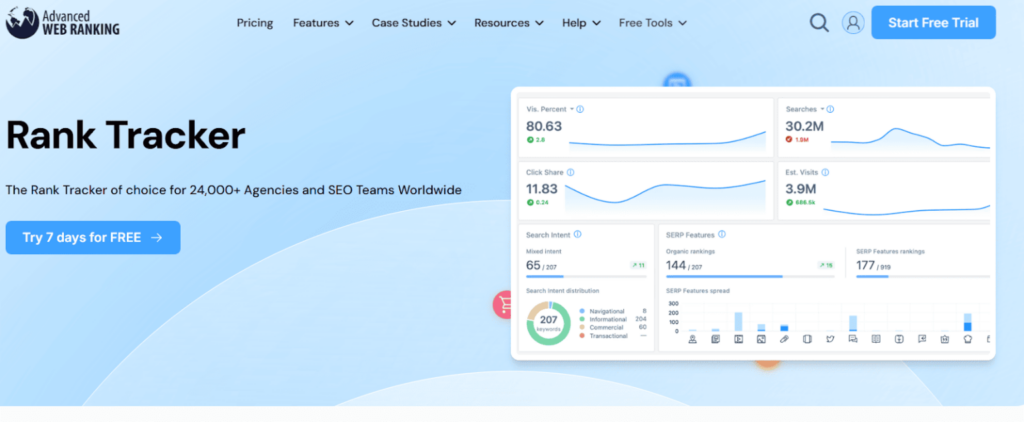
Advanced Web Ranking (AWR) has been around forever, and that’s not a bad thing. It’s one of those tools that agencies quietly rely on because it just gets ranking data right.
When I tested AWR for client reporting, I understood why so many agencies stick with it. It consistently delivers clean, no-drama data, It feels like a veteran tool built by people who’ve done agency life.
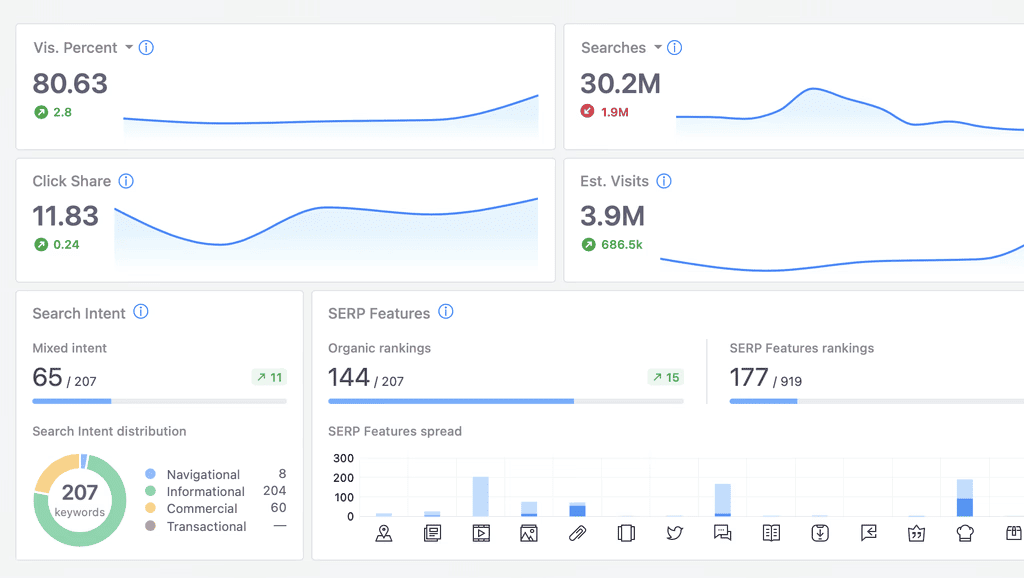
It tracks across 4,000+ search engines (including Google, YouTube, Amazon, Yandex, Baidu, and DuckDuckGo) and works in over 190 countries. You can pull desktop and mobile results, check “pixel position” for above-the-fold visibility, and even measure how much SERP real estate your pages actually own.
Why It’s Worth It
- Polished, client-ready reports with scheduled delivery
- Forecasting and click-share metrics for deeper insight
- Multi-engine and multi-location tracking
- Excellent historical and trend visualization
Pricing
- Pro: $69/month
- Agency: $139/month
- Enterprise: $349/month
Reviews & Ratings
- G2: 4.3 out of 5 stars (21+ reviews)
- Capterra: 4.8 out of 5 stars (35+ reviews)
Sentiment: A veteran tool trusted by agencies for its reporting reliability.
12. Google Search Console – Best Free Diagnostic Tracker
Best for: Beginners to advanced SEOs who want raw, first-party data straight from Google.
How I use it: I use it as my baseline truth layer. Before I trust any rank tracker, I check GSC to understand impressions, CTR shifts, device differences, and if Google is rewriting the SERP.
Overview
Google Search Console is not a typical rank tracker, but after testing 30+ tools. GSC is the diagnostic tool I trust more than any SaaS product. It is the closest thing we have to Google’s own view of your site, and it explains fluctuations that third-party trackers often miss.
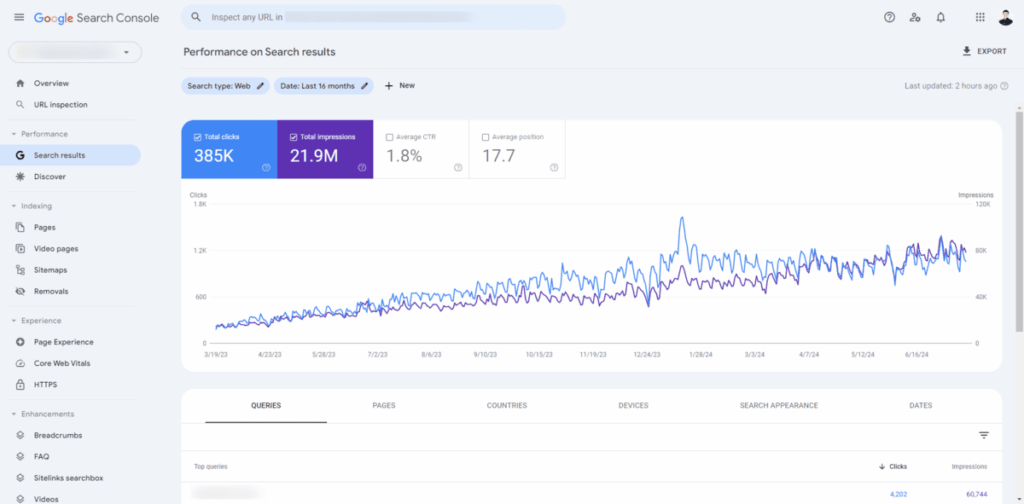
When I was reviewing AI-related visibility drops, GSC helped me see the exact moment impressions fell but rankings stayed the same. That told me the SERP layout changed, not our content. No paid tool gives you that level of clarity.
Its strength is in patterns.
You see how mobile and desktop behave differently, which countries pull your brand the most, where CTR collapses even when rankings don’t budge, and whether your page is being detected consistently.
Every serious SEO uses GSC alongside paid tools. Because paid trackers can tell you your rank, but GSC tells you the story behind it.
Why It’s Worth It
- First-party ranking, impression, and click data from Google
- Device-level visibility (mobile vs desktop)
- Country and page-level performance
- CTR diagnostics that reveal SERP changes
- Essential for diagnosing sudden drops or shifts
- Breadcrumbs for understanding AI/SGE impact
Pricing
- Free
Reviews & Ratings
- G2: 4.7 out of 5 stars (437+ reviews)
- Capterra: 4.8 out of 5 stars (211+ reviews)
Sentiment: Valued everywhere as the essential companion to any rank tracker. You won’t find an SEO list that doesn’t include it.
13. Morningscore – Best for Beginners and Small Teams
Best for: SMBs, early-stage marketers, startup teams who want a simple, mission-based SEO tracker.
How I use it: I use it when I’m working with beginners or non-SEOs. The gamified missions help them actually execute SEO tasks instead of feeling overwhelmed.
Overview
Morningscore is the most “fun” rank tracker I tested — and I mean that in the best way.
SEO can feel overwhelming, especially for small teams, and this tool solves that with a mission-based system that removes the guesswork.
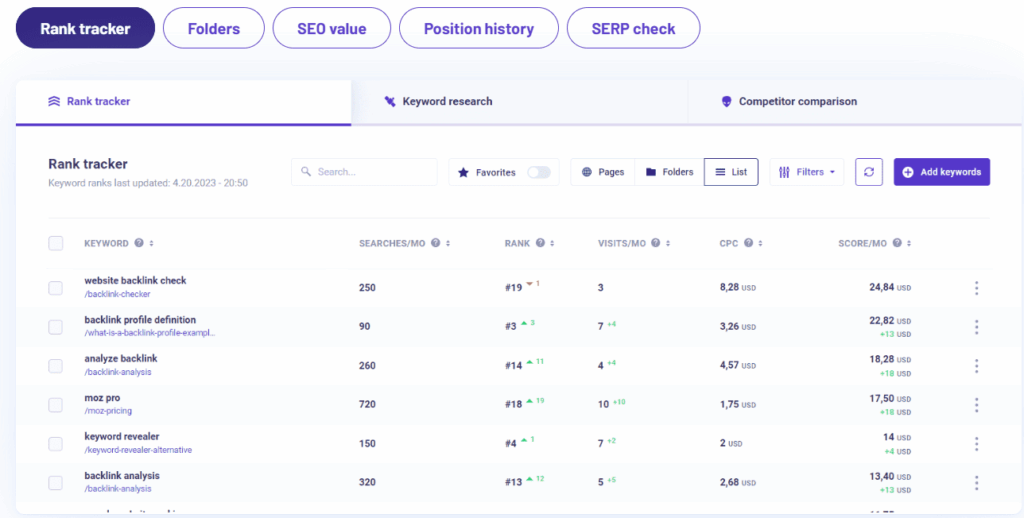
It tracks rankings daily, gives you a clean SEO “health score,” and turns tasks into actionable challenges. When I was helping a non-technical team build momentum, this was the only tool that made them feel confident instead of intimidated.
Under the playful design, the rank tracker is solid.
It generates accurate updates, clear progress graphs, and insights that make sense even to someone who has never opened Semrush.
Think of it as rank tracking without ego, built for teams who want direction more than dashboards.
Why It’s Worth It
- Gamified missions to help beginners execute SEO tasks
- Daily rank tracking with clean visuals
- Keyword difficulty scoring and content suggestions
- Easy reporting for small teams
- Perfect for non-SEOs who need clarity
Pricing
- Lite: $49/month
- Business: $69/month
- Pro: $129/month
- Premium: $259/month
Reviews & Ratings
- G2: 4.5 out of 5 stars (26+ reviews)
- Capterra: 4.8 out of 5 stars (43+ reviews)
Sentiment: A great tool for teams that want clarity and motivation, not overwhelm, “making SEO doable” for SMBs.
14. Ubersuggest – Best Low-Cost Starter Rank Tracker
Best for: Beginners, solo founders, and small business owners starting SEO on a tight budget.
How I use it: I use it for light audits and to quickly check keyword ideas or early ranking movement before switching to heavier tools.
Overview
Ubersuggest is not an enterprise tool, but it is one of the most common starting points for people entering SEO. When I tested it again for this review, I found the rank tracker improved a lot compared to earlier versions.
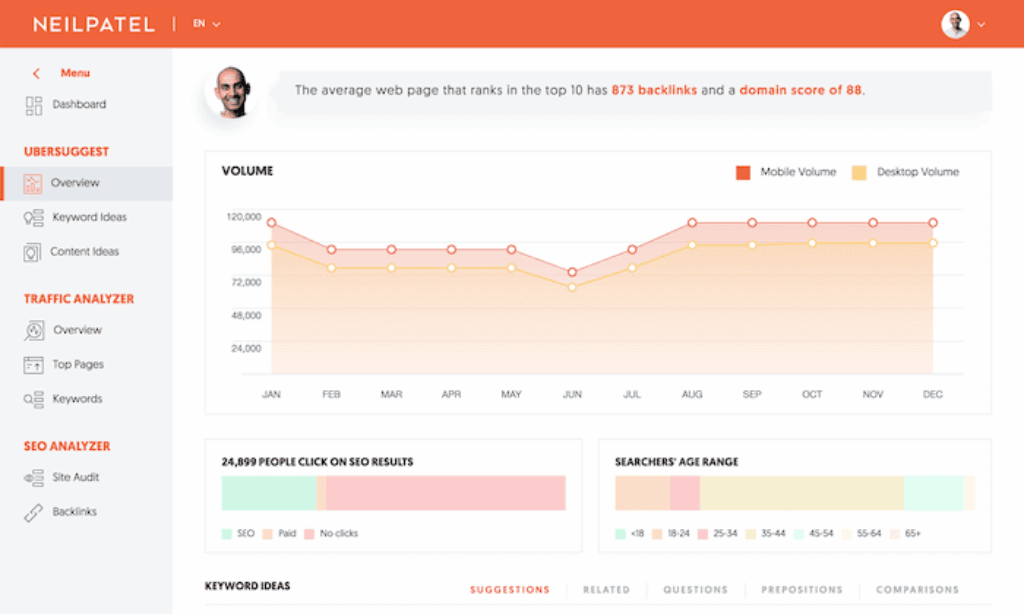
It tracks mobile and desktop rankings, lets you set up competitor comparisons, and gives you basic SERP snapshots. For small sites or early-stage blogs, that’s enough.
I also tested its lifetime deal, and for small teams who don’t want recurring payments, it’s one of the best beginner-friendly offers in the industry.
Ubersuggest won’t replace Ahrefs or Semrush, but that’s not its purpose. It fills the gap between free tools and advanced suites.
Why It’s Worth It
- Affordable rank tracking
- Competitor comparisons
- Keyword suggestions + SERP snapshots
- Mobile and desktop tracking
- Great lifetime pricing option
Pricing
- Individual: $12/month
- Business: $20/month
- Enterprise: $40/month
Reviews & Ratings
- G2: 4.2 out of 5 stars (149+ reviews)
- Capterra: 4.4 out of 5 stars (93+ reviews)
Sentiment: A strong starter tool for newcomers and light SEO tasks with simple UI.
15. ProRankTracker – Best for Local SEO Tracking
Best for: Agencies, local SEO specialists, and teams managing multiple client dashboards.
How I use it: I use it for hyper-local tracking in projects that require street-level accuracy or when I need extremely detailed reporting.
Overview
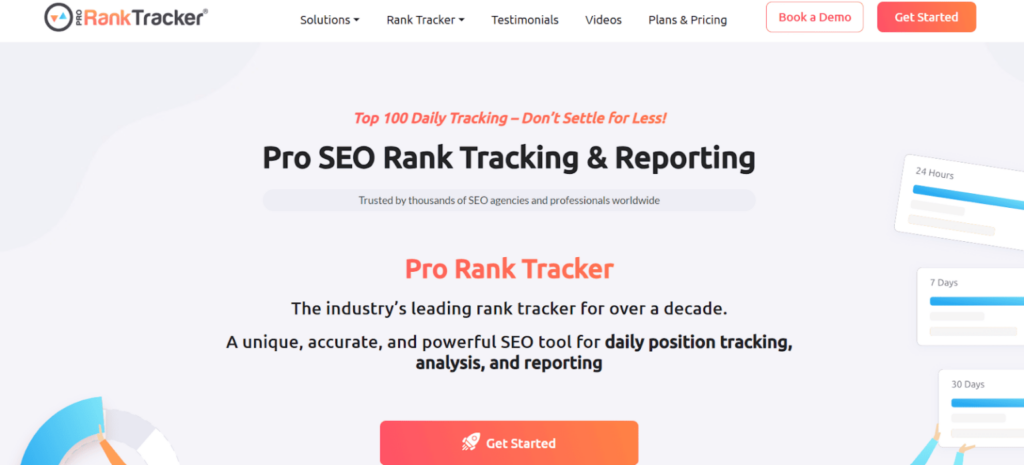
ProRankTracker showed up in every external list I cross-checked, and after testing it again, I understood why agencies rely on it.
It delivers extremely accurate, detailed rank tracking across Google, Bing, YouTube, Amazon, and Yahoo. But where it really shines is local SEO.
You can track rankings down to ZIP codes, neighborhoods, and precise locations.
During testing, it consistently matched live SERPs with almost no discrepancies. The reporting engine is also one of the strongest in this category — white-label ready, scheduled, and highly customizable.
If you manage clients, this level of detail matters.
You see exactly where each keyword stands, how competitors shift, and how SERP features appear.
It isn’t pretty in the way Nightwatch is, but it’s reliable and built for serious tracking.
Why It’s Worth It
- Extremely accurate keyword tracking
- Multi-engine support including YouTube and Amazon
- Hyper-local tracking with ZIP-level precision
- Customizable, white-label reports
- Strong competitor tracking features
Pricing
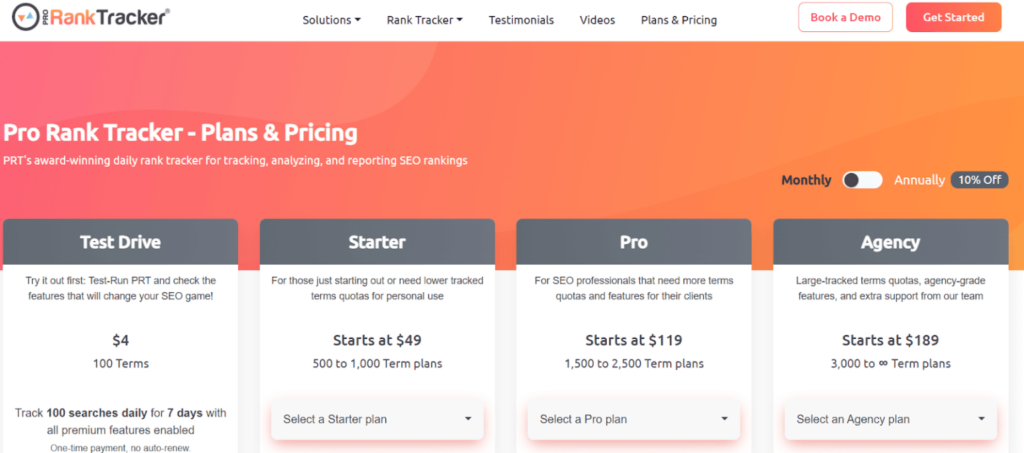
- Tester: $4/100 terms
- Starter: $49/month
- Pro: $119/month
- Agency: $189/month
Reviews & Ratings
- G2: 4.6 out of 5 stars (60+ reviews)
- Capterra: 4.6 out of 5 stars (122+ reviews)
Sentiment: Loved by local SEO professionals for granular ZIP-level accuracy.
Key Takeaways: What We Learned After Testing 30+ Rank Trackers
After a few weeks of testing, demos, and late-night comparisons, here’s what really stood out:
1. AI visibility is no longer optional
The best tools like Ahrefs, Semrush, SE Ranking, and AccuRanker now track how your brand shows up in AI Overviews, ChatGPT, and Gemini, not just Google’s blue links.
During testing, this explained traffic drops that rankings alone could not. It is becoming clear that the next wave of search visibility happens in these AI layers, not just on page one.
2. Speed actually matters
When you are managing clients, reacting to an update, or diagnosing unexpected drops, slow data feels like guesswork.
AccuRanker and Nozzle stood out because they deliver near real-time insights. Watching rankings shift in minutes instead of days helps you make decisions faster and with more confidence. Speed is becoming a competitive advantage.
3. Simple dashboards win
One thing became obvious while switching between heavy platforms.
Most solo marketers and SMBs do not need ten layers of data.
They need clarity.
SERPWatcher and Wincher reminded us how powerful a clean interface can be. Less noise. More direction. You understand what is happening within minutes, and that alone makes a huge difference.
4. Automation saves you hours
Integrations that used to feel optional now save hours every week.
SE Ranking, Nightwatch, and Ahrefs all make it easy to send data into Looker Studio, Slack, or GSC without manual work.
Once you set up those automations, reports update themselves, alerts fire instantly, and the entire SEO workflow becomes much smoother. It is hard to go back once you get used to that level of efficiency.
5. There’s no one-size-fits-all
This was the clearest takeaway.
The “best” rank tracker depends on how you work and what you need.
Larger teams and agencies need deep data, APIs, granular segmentation, and long-term historical sto rage. Smaller businesses need something instinctive, visual, and budget-friendly.
Every rank tracking tool on this list is strong for a different reason. The key is finding the one that fits your workflow, not someone else’s.
Final Verdict: The Rank Tracker Landscape in 2026
AI didn’t kill SEO. It just made it more measurable.
Rank trackers today are not just about checking whether you climbed to position three. They show how your brand appears across Google, AI chatbots, snippets, conversation layers, and even voice surfaces. In many cases, that wider view explains changes that rankings cannot.
If you want reliability and deep context, Ahrefs and Semrush still set the standard for best rank tracking tools.
If you want the best balance of price, usability, and AI readiness, SE Ranking stands out.
If you want real time control and granular data, AccuRanker and Nozzle are built for that kind of work.
But here is the truth every experienced SEO eventually learns.
The best rank tracker is the one you will actually open every day. Because the things you measure consistently are the things you finally move.
Because in SEO, what you measure consistently is what you eventually move.